
Why Is Life So Hard and Painful? What Helps
Stress, loss, loneliness, poor sleep or depression can make life feel hard. How to tell a rough season from depression, what helps, and when to get help.
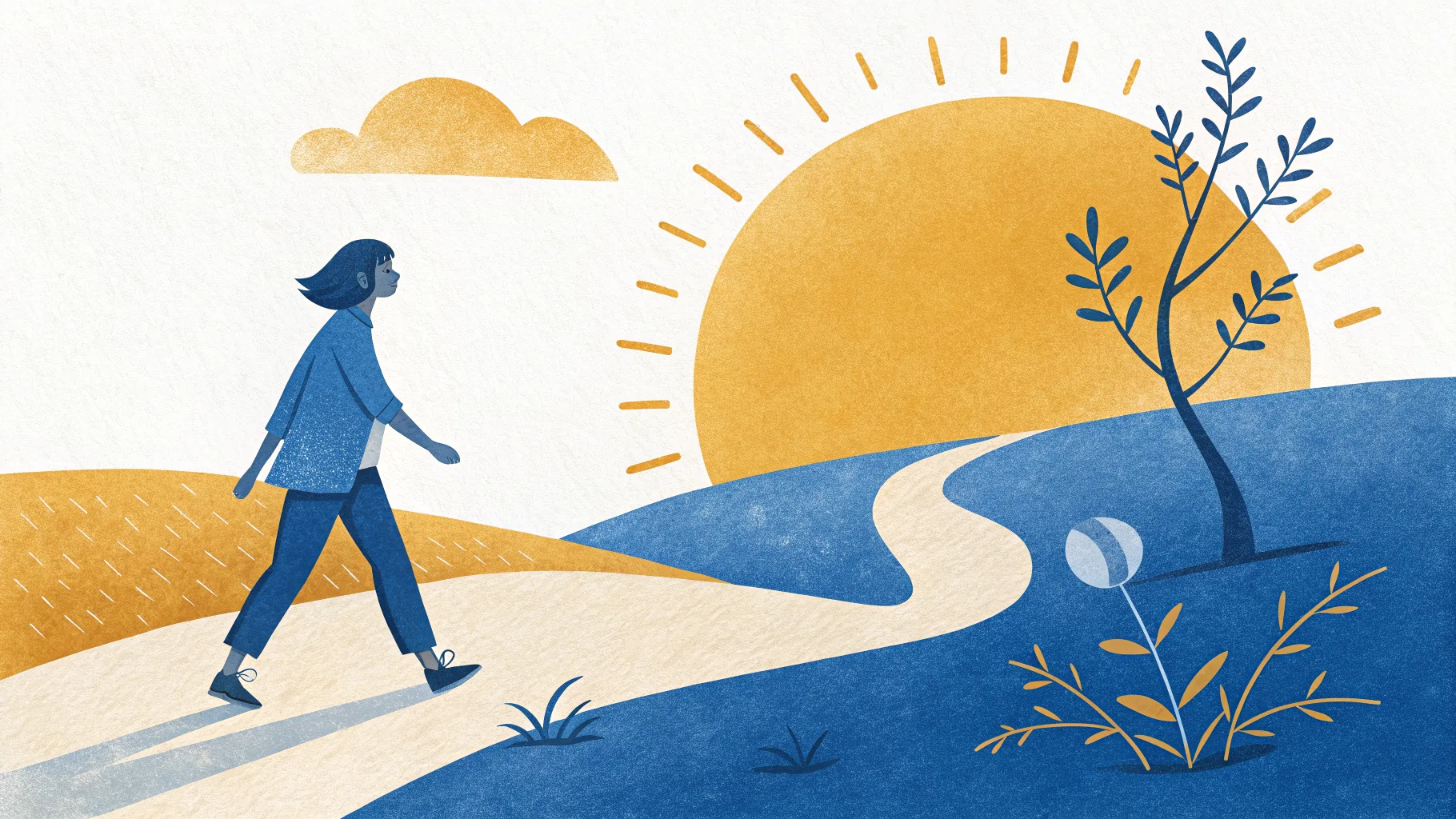
Life feels hard when what's being asked of you outruns what you have to meet it. Stress, loss, money worries, loneliness, illness and poor sleep add to the load, while depression, anxiety and exhaustion drain the energy you would normally carry it with. Some hard seasons are a normal response to real problems and ease as things change. But if everything has felt heavy most of the day, nearly every day, for two weeks or more, and even good days don't lift it, depression may be part of the answer, and that part is treatable.
If you're thinking about suicide, or life feels too painful to keep going, call or text 988 to reach the 988 Suicide & Crisis Lifeline, or chat at 988lifeline.org. It's free, confidential and open 24/7, and you don't have to be in a suicidal crisis to reach out: it's also there for emotional distress or when you just need someone to talk to. If you're in immediate danger, call 911.
KEY TAKEAWAYS
- Life usually feels hardest when stressors stack up faster than your sleep, support, time and energy can absorb them.
- Emotional pain is real pain. Depression can show up in the body as aches, exhaustion, and changes in sleep and appetite.
- A hard season is tied to things you can name and still has moments of relief. Depression lasts most of the day, nearly every day, for at least two weeks.
- Small steps help: protecting sleep, moving your body, reaching out to one person, and shrinking the day into one doable task.
- You don't have to hit rock bottom to get help. Depression and anxiety are treatable with talk therapy, medication, or both.
Why is life so hard? 9 common reasons
Hard times rarely have a single cause. Often several of these are happening at once, and each one makes the others heavier.
1. Stress that stacks up
One hard thing is usually manageable. Life starts to feel overwhelming when several land together: a demanding job, a sick parent, a tight budget, a relationship under strain. When the pressure never lets up, your body's stress response doesn't get a chance to switch off, and ordinary tasks like answering emails or making dinner start to feel monumental.
2. Loss and big life changes
Grief, a breakup, a move, a job loss or a new diagnosis all force you to rebuild your routines at the same time you're hurting. Even welcome changes, like a new baby or a new job, take more energy than people expect.
3. Loneliness and too little support
About 1 in 3 adults in the U.S. report feeling lonely, and about 1 in 4 report not having social and emotional support, according to the CDC. The CDC lists depression and anxiety among the health risks of social isolation and loneliness. The same problem feels heavier when you carry it alone, which is one reason isolation and mental illness tend to feed each other.
4. Not enough sleep
Poor sleep lowers your tolerance for frustration and setbacks, so everything feels harder the next day. It also runs in both directions with depression: depression disrupts sleep, and poor sleep deepens depression. Here's more on how depression affects sleep.
5. Money, work and modern pressure
Financial strain, long hours, caregiving and the pressure to be productive, reachable and "on" all the time leave little room for rest. Social media adds a steady stream of other people's best moments to compare yourself with.
6. Depression
Depression is more than sadness. It drains energy, flattens enjoyment and makes it harder to concentrate and make decisions, so everything takes more effort than it used to. It also changes how problems look. Depression tends to darken your view of yourself, the world and the future all at once, which is why a setback can start to feel permanent and personal. Read more about depression symptoms and treatment, or about online depression treatment with TelepsychHealth.
7. Anxiety
Anxiety keeps you braced for what might go wrong, even when nothing is going wrong right now, and living on high alert is exhausting. Occasional worry is a normal part of life. With an anxiety disorder, the National Institute of Mental Health (NIMH) notes, the anxiety "does not go away, is felt in many situations, and can get worse over time." See the treatments for anxiety that work, or online anxiety treatment.
8. Past trauma
Trauma can leave your nervous system on alert long after the danger has passed, so everyday stress hits harder than it seems to for other people. Childhood matters here too: the CDC notes that prolonged stress from adverse childhood experiences can affect a child's developing brain, immune system and stress-response systems. If this sounds familiar, PTSD and trauma treatment can help.
9. Health problems, ADHD and substances
Your body can make life harder in ways that are easy to miss. According to NIMH, depression often occurs alongside chronic illnesses such as diabetes, heart disease and chronic pain, and some medications and medical conditions, such as viruses or thyroid disorders, can cause the same symptoms as depression. Untreated ADHD can make paperwork, deadlines and keeping track of appointments take far more effort than they seem to take for others. And alcohol or other substances can numb a hard day but tend to make sleep and mood worse over time; if you're relying on them to get through, substance use treatment can help.
Why life can feel so painful
Emotional pain is real pain. When people ask why life is so hard and painful, they are often describing an ache that's hard to put into words: grief, rejection, shame, or a heaviness that won't lift. Depression can show up in the body as well. NIMH lists physical aches, headaches, cramps or digestive problems without a clear physical cause among its symptoms, along with fatigue and changes in sleep and appetite.
Pain also grows when it has nowhere to go. Holding it in, pushing through without rest, or believing you shouldn't feel this way adds a second layer of suffering on top of the first. When you begin to name what you've been carrying, out loud to someone you trust or on paper, it starts to lose some of its power. You begin to see the difference between who you are and what you've been through.
If the pain has turned into wishing you could disappear or not wake up, tell someone. Those are thoughts of death, and they are a reason to reach out now, not later: call or text 988. You can read more about passive and active suicidal thoughts and why both deserve attention.
If you're in crisis or thinking about suicide, call or text 988 (the 988 Suicide & Crisis Lifeline), free and confidential 24/7. If you're in immediate danger, call 911. An appointment is for ongoing care, not emergencies.
Talk with a board-certified psychiatric provider — from home
TelepsychHealth offers online psychiatry for adults in Arizona, California, Connecticut, Florida, Georgia, Illinois, Michigan, Minnesota, New York, and Texas, and therapy in Illinois, Texas and Florida. We are in-network with major insurance plans, which vary by state.
Why is life so hard for some people and not others?
If life seems harder for you than it does for the people around you, that doesn't mean you're weaker. Usually it means you are carrying more, or carrying it without the help you need.
- Circumstances aren't equal. Poverty, discrimination, chronic illness, caregiving and unsafe relationships put far more weight on some people than others.
- Biology plays a part. NIMH notes that genetic, biological, environmental and psychological factors all play a role in depression.
- Early experiences shape the stress response. Adversity in childhood can affect how the body handles stress later on, as the CDC describes.
- Support differs. A friend to call, a flexible boss or a little savings can soften the same setback that flattens someone without them.
- You're comparing your inside to their outside. Most people don't show their hard days, so it's easy to assume everyone else is coping better than they are.
Is it a hard season or depression?
Feeling that life is hard isn't a diagnosis. The useful question is whether you're going through a hard season or whether something like depression is making that season heavier.
A hard season usually:
- is tied to something you can name, such as a loss, a deadline or a conflict
- still has moments of relief, humor or enjoyment
- eases as circumstances improve or as you adjust
- leaves your sleep, appetite and self-care mostly intact
Depression is more likely when:
- you feel low, empty or hopeless most of the day, nearly every day, for at least two weeks, the time frame NIMH uses for a diagnosis
- you've lost interest or pleasure in things you used to enjoy
- your sleep, appetite, energy or concentration have changed
- you feel worthless or guilty, or as though nothing will get better
- good news doesn't lift you the way it used to
- you have thoughts of death or suicide
A quick check that doctors use is the PHQ-2. It asks how often, over the past two weeks, you've been bothered by little interest or pleasure in doing things, and by feeling down, depressed or hopeless. Each answer is scored from 0 ("not at all") to 3 ("nearly every day"). In the study that validated it, a total of 3 or more was the best cut-off for flagging possible major depression. It is a screening question, not a diagnosis, but a score in that range is a good reason to book a full evaluation.
Another question worth asking yourself: if your circumstances improved tomorrow, do you believe you would feel better? If the answer is yes, the problem may be mostly the load you're carrying. If you can't imagine anything helping, that hopelessness is often a symptom of depression rather than a fact about your life, and it is one that treatment can change.
What helps when life feels hard
These steps won't fix a hard situation on their own, but they can make it more bearable while you work on what can change.
- Name the load. Write down everything weighing on you, then sort it into what you can change, what you can't, and what can wait. Problems feel smaller on paper than they do circling in your head.
- Shrink the day. When everything feels like too much, pick one small, doable task and finish it. In depression, action often has to come before motivation, not after it.
- Protect your sleep. Keep a steady wake-up time, wind down without screens, and limit caffeine late in the day. If you've been sleeping badly for weeks, insomnia and sleep problems can be treated.
- Move your body. A 2024 BMJ review of 218 randomized trials found walking or jogging, yoga and strength training to be effective treatments for depression, with stronger effects at higher intensity, and suggested exercise be considered alongside psychotherapy and antidepressants. The authors rated their confidence in the evidence as low for walking or jogging and very low for the other types of exercise, so think of exercise as one part of treatment, not a replacement for it. Here's a guide to exercise for mental health.
- Reach out to one person. You don't need to explain everything. The NHS's five steps to mental wellbeing start with connecting with other people, followed by being physically active, learning new skills, giving to others and paying attention to the present moment.
- Go easy on alcohol and other substances. They can take the edge off a bad night, but they tend to disrupt sleep and can make low mood and anxiety worse.
- Give yourself permission to rest. Take slow, deep breaths. Do one small thing that brings comfort, whether it's a cup of tea, a walk outside or turning off notifications for an hour. Small acts of care build resilience over time.
When to get professional help
Consider talking with a doctor or mental health professional if:
- hard feelings have lasted most days for two weeks or more
- they're affecting your work, school, relationships or ability to take care of yourself
- you're using alcohol or drugs to get through the day
- the self-care steps above haven't made a difference
- you're having thoughts of death or suicide (call or text 988 now)
"People often wait until they hit rock bottom before reaching out, but therapy is most effective when we seek it early—before we unravel."
You are not the only one feeling this way. The American Psychiatric Association notes that in any given year more than one in five adults in the U.S. has a diagnosable mental disorder, and that mental illness is treatable. According to NIMH, depression treatment typically involves psychotherapy (in person or virtual), medication, or both, and most people with depression benefit from treatment. A good first visit also looks for medical causes: some medications and conditions, such as thyroid disorders, can cause the same symptoms as depression, and a provider can rule them out with a physical exam, an interview and lab tests.
You don't need to know exactly what's wrong before you reach out. Working that out is the clinician's job.
Getting help with TelepsychHealth
TelepsychHealth offers psychiatric evaluations and medication management by secure video for adults who are physically located in Arizona, California, Connecticut, Florida, Georgia, Illinois, Michigan, Minnesota, New York or Texas at the time of each visit. Therapy is available only in Illinois, Texas and Florida. New to video care? Learn what telepsychiatry is and how well it works. When you're ready, you can request an appointment online or call (888) 730-5220.
If you're in crisis right now, don't wait for an appointment: call or text 988, or call 911 if you're in immediate danger.
You're not broken. You're human. And with support, feeling better isn't just possible. It's within reach.
Frequently asked questions
Why is my life so hard compared to everyone else's?
Often because you're carrying more than others can see, such as money stress, caregiving, illness, past trauma or a lack of support, or because depression, anxiety or ADHD is making ordinary things take more effort. It's also easy to compare your hardest days with other people's best moments. Feeling this way isn't a sign of weakness, and if it has lasted for weeks, it's worth an evaluation.
Why have I lost joy in life?
Losing interest or pleasure in things you used to enjoy is a core sign of depression, and it appears on NIMH's list of depression symptoms. Burnout, grief and chronic stress can do it too, and so can alcohol and some medications. If it has lasted most days for two weeks or more, talk with a doctor or mental health professional. You might also find it helpful to read why you might feel empty and what helps.
At what age is life most stressful?
Older research found a U-shaped pattern: well-being dipped to its lowest point in midlife, around age 50 across 145 countries. Newer data suggest that pattern has changed. A 2025 analysis of U.S. and U.K. survey data, plus 2020–2025 data pooled from 44 countries (the U.S. and U.K. among them), found that mental distress now declines with age, because young people's mental health has worsened. Today, younger adults tend to report the most distress, but a hard season can arrive at any age.
What can I do if I feel like I can't cope with life?
Start with the next few hours rather than the whole picture: eat something, rest, and reach out to one person you trust. If you feel unable to cope or unsafe, call or text 988 at any time, day or night. If you've been struggling for weeks, book an evaluation with a primary care doctor or psychiatric provider; you don't have to wait until things get worse.
Is it normal to feel like life is pointless?
Many people go through stretches when life feels meaningless, especially after a loss or during depression. Hopelessness is a recognized symptom of depression, which means it can improve with treatment, even when it feels permanent. If feeling that life is pointless comes with thoughts of not wanting to be alive, call or text 988 now.
Sources
- National Institute of Mental Health. Depression (NIH Publication No. 24-MH-8079, revised 2024).
- National Institute of Mental Health. Anxiety Disorders.
- Centers for Disease Control and Prevention. Health Effects of Social Isolation and Loneliness (2024).
- Centers for Disease Control and Prevention. About Adverse Childhood Experiences.
- American Psychiatric Association. What Is Mental Illness?
- Kroenke K, Spitzer RL, Williams JB. The Patient Health Questionnaire-2: validity of a two-item depression screener. Med Care. 2003;41(11):1284-92.
- Noetel M, et al. Effect of exercise for depression: systematic review and network meta-analysis of randomised controlled trials. BMJ. 2024;384:e075847.
- Blanchflower DG. Is happiness U-shaped everywhere? Age and subjective well-being in 145 countries. J Popul Econ. 2021;34(2):575-624.
- Blanchflower DG, Bryson A, Xu X. The declining mental health of the young and the global disappearance of the unhappiness hump shape in age. PLoS One. 2025;20(8):e0327858.
- NHS. 5 steps to mental wellbeing.
- 988 Suicide & Crisis Lifeline. 988lifeline.org.
If you're in crisis or thinking about suicide, call or text 988 (the 988 Suicide & Crisis Lifeline), free and confidential 24/7. If you're in immediate danger, call 911. An appointment is for ongoing care, not emergencies.
Talk with a board-certified psychiatric provider — from home
TelepsychHealth offers online psychiatry for adults in Arizona, California, Connecticut, Florida, Georgia, Illinois, Michigan, Minnesota, New York, and Texas, and therapy in Illinois, Texas and Florida. We are in-network with major insurance plans, which vary by state.

Founder and Medical Director of TelepsychHealth. Board-certified addiction psychiatrist caring for patients in ten states by secure video.